
With the spread of remote work, a mandatory item on any cybersecurity strategy checklist is using a virtual private network (VPN) solution on your employees' machines.
This type of tool creates an encrypted tunnel between client and server; that is, the employee's computer, laptop or mobile device connects to the server, whether it is a legacy system or a cloud environment.
This way, you make man-in-the-middle attacks and other intrusions into the traffic to your critical applications and confidential information more difficult.
Which VPN should you use?
There are hundreds of VPN solutions on the market: from the cheapest and easiest to deploy to the most expensive, professional and complex to operate.
Needless to say, in the rush to adapt to the “new normal”, many companies (especially small and medium-sized ones) choose products in the first category, believing that this type of tool is “all the same”.
Big mistake: not all of them offer the same level of security, and some lack features that, although overlooked, make all the difference in protecting your environment.
It's important, for example, to make sure the chosen VPN solution works with a no-logs policy.
This means the provider does not store records (logs) of the connections made through this encrypted tunnel.
Many cheap or free software products of this kind promise not to keep browsing logs, but they do.
In the event of a breach that causes a data leak (as recently happened with some apps of this type), a malicious actor will be able to determine, through these records, who accessed what, when and from where.
Another important feature in any VPN that is often overlooked is the kill switch.
How does it work?
It works simply: if the internet connection is interrupted for any reason, it won't be possible to reconnect until the VPN is activated again.
In simpler solutions that lack this feature, your connection may drop momentarily (sometimes without you even noticing) and, when it reconnects automatically, the user starts browsing the web without the protection of the virtual private network.
These are just a few features worth looking at before choosing which VPN will be part of your defense arsenal.
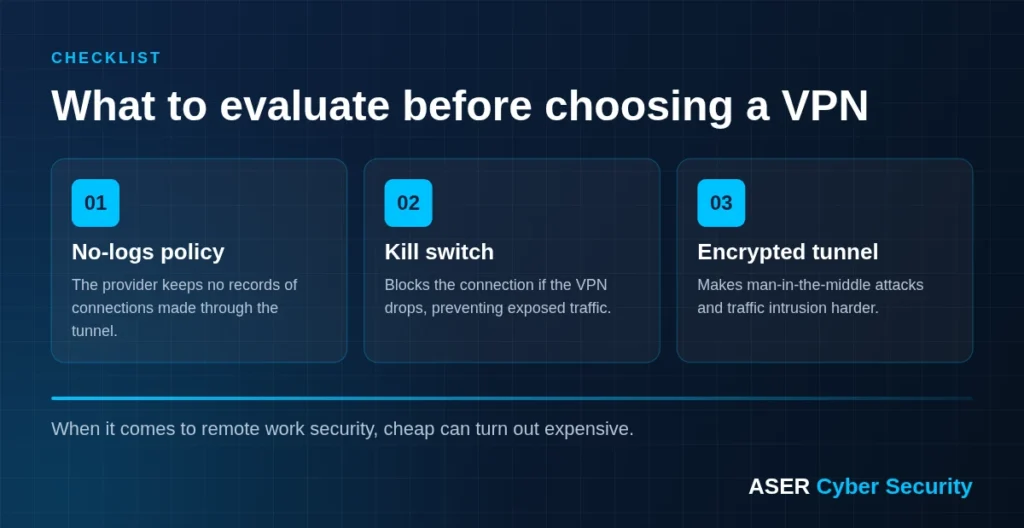
But always remember a universal rule: cheap can turn out expensive!
Corporate VPN managed by specialists
The managed ASER UTM Firewall includes VPN for secure remote access, run 24×7 by our team.
What can you do to protect yourself?
The best way to protect yourself on virtual private networks is indeed to use VPNs to encrypt the sites you visit, but in reality you need to think about how to improve the UTMs and the security of your employees and your company.
A way to raise your company's security and prevent cyberattacks and data theft.
That's why it's important to find a company that can help you secure your systems.
Count on Aser Security , which has the best cybersecurity specialists who will help you keep your information secure.
Is your team's remote access really secure?
For more than 20 years, ASER has protected Brazilian companies with 100% managed security. Talk to an expert and get a free assessment of your business risks.