
Data will remain one of the main concerns of organizations around the world. LGPD, targets, privacy protection
Since Brazil's General Data Protection Law (LGPD) No. 13,709 came into force, there has been a lot of talk about data breaches, especially in the relationship between companies and their customers.
But How Does a Data Breach Happen?
A data breach occurs when your company/organization suffers a security incident involving data it is responsible for (whether customers' or employees') that results in a breach of the confidentiality, availability or integrity of the data.
It sets rules for everyone who collects, stores and shares third parties' personal data.
The goal of these rules is to guarantee:
- Respect for privacy;
- Informational self-determination;
- Freedom of expression, information, communication and opinion;
- The inviolability of privacy, honor and image;
- Economic and technological development and innovation;
- Free enterprise, free competition and consumer protection;
- Human rights, the free development of personality, dignity and the exercise of citizenship by natural persons.
Data containing personal information has always been an attractive target.
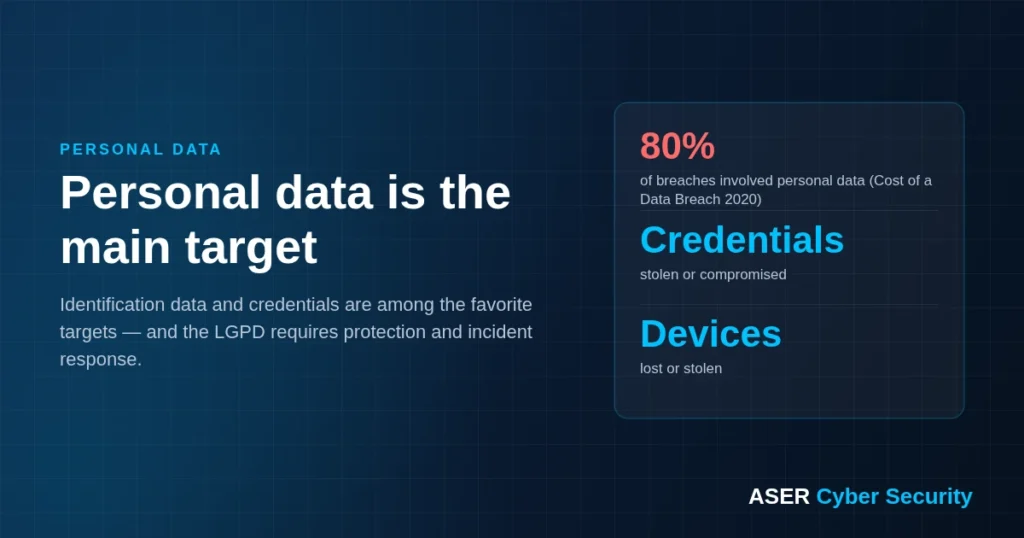
The 2020 Cost of a Data Breach Report, developed by the Ponemon Institute, found that 80% of security breaches involved personal data, more than any other type of compromised data.
Personally identifiable information remains among the main targets, along with stolen or compromised authentication credentials.
Lost or stolen devices also remain a concern for organizations. According to the report, lost or stolen devices are among the seven main factors that amplify the cost of a data breach.
But How Can You Protect Yourself and Your Company?
To protect your company, you need to take the following steps:
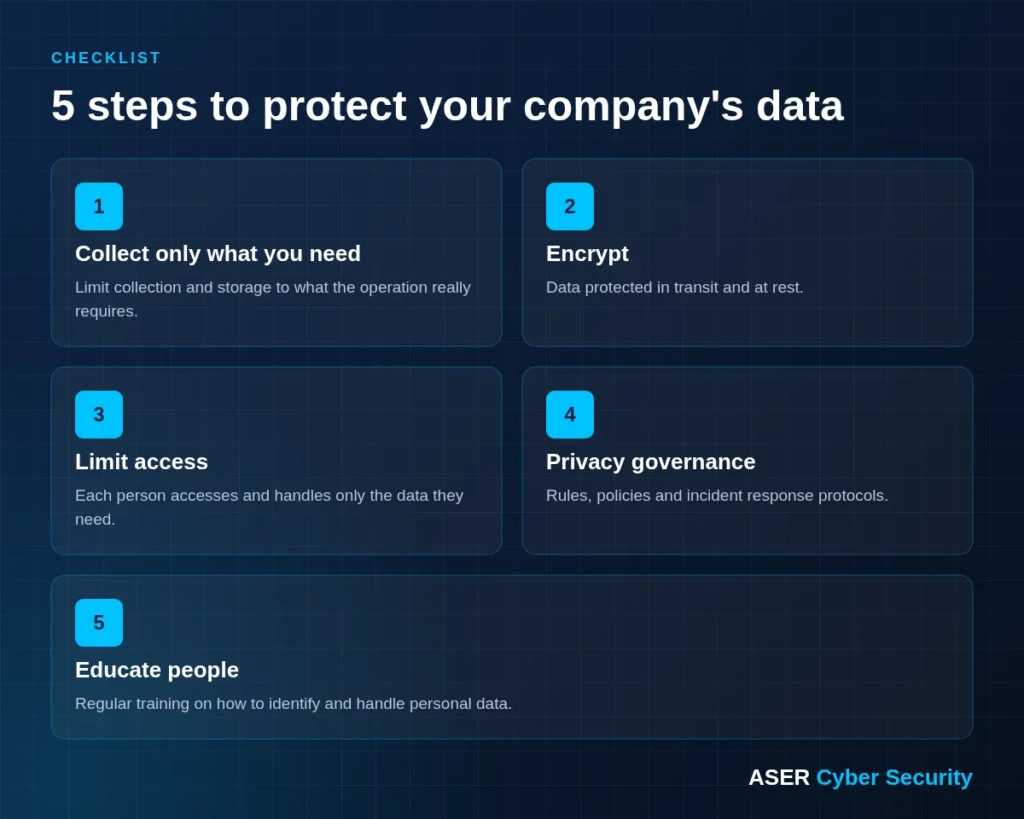
Collect and retain only the data you need
To minimize risk, restrict data collection and storage to what is truly necessary for your operations and can be justified if a problem occurs.
Obtain the appropriate permissions from data subjects before collecting their data, capture information only when needed, and don't forget to limit data access through system controls and usage policies.
Encrypt data in transit and at rest
Encrypt data in every state, in transit and when it reaches its destination. Encryption standards must meet the requirements of the privacy regulations and laws your company must carefully observe.
Limit data access and movement
This part is very important, as data leaks through employees and third parties are growing exponentially and data access should be limited to what is strictly necessary. Reduce movement within systems. Regularly restrict, monitor and review access by partners and contractors.
Find out if your company's data has already leaked
The ASER Cyber Threat Intelligence monitors leaks, forums and the dark web to identify exposed credentials and data before they are used against you.
Establish a data privacy governance program
It is worth developing and defining rules of good practice and governance that establish organizational conditions, operating procedures, processes (including complaints and requests from data subjects), security standards, technical standards, specific obligations for the different parties involved in processing, educational actions, internal oversight and risk mitigation mechanisms, and other aspects related to the processing of personal data.
Policies should ensure that company practices meet regulatory requirements.
Compliance with external regulations will affect how an organization must disclose a data breach.
Internal policies should require adequate response and remediation protocols.
Educate stakeholders on the proper access and handling of personal data
Properly teaching and explaining how to handle personal data should be part of your company's overall security strategy. This helps defend against accidental data leaks and discourages intentional disclosures.
Many accidental data leaks can be prevented with regular information security training.
This includes guidance on how to identify personal information, with explicit instructions on what is considered personal information within the organization, in the context of laws and regulations.
Don't assume employees in every area of your company have the knowledge needed to understand their role in data protection.
Attitudes toward data can vary from person to person within a company.
Are your company and your customers really secure?
Aser Security has the best security solutions to keep your company always secure and running.
Talk now to one of our specialists and discover our services.
Is the data your company stores really protected?
For more than 20 years, ASER has protected Brazilian companies with 100% managed security. Talk to an expert and get a free assessment of your business risks.