
The sharp rise in online shopping since the start of the COVID-19 outbreak has led to a significant increase in cyberattacks on online retailers' websites and apps, making it imperative for merchants to stay alert to the latest risks.
E-commerce has been under a great deal of additional pressure since the pandemic began. Lockdown restrictions and health concerns had a significant impact on buying behavior, creating unprecedented conditions for retailers.
With consumers unable to visit physical stores, reliance on e-commerce grew significantly and companies were forced to adapt quickly.
BDO found that online sales in the United Kingdom showed record growth in May 2020 – 129.5% higher than in the same period of May 2019.
Unfortunately, the growth of e-commerce has been accompanied by an increase in the number of cybercriminals targeting online retailers. The growth in online shopping has put pressure on retailers' supply chains, order management and fulfillment systems, adding more security challenges to the mix.
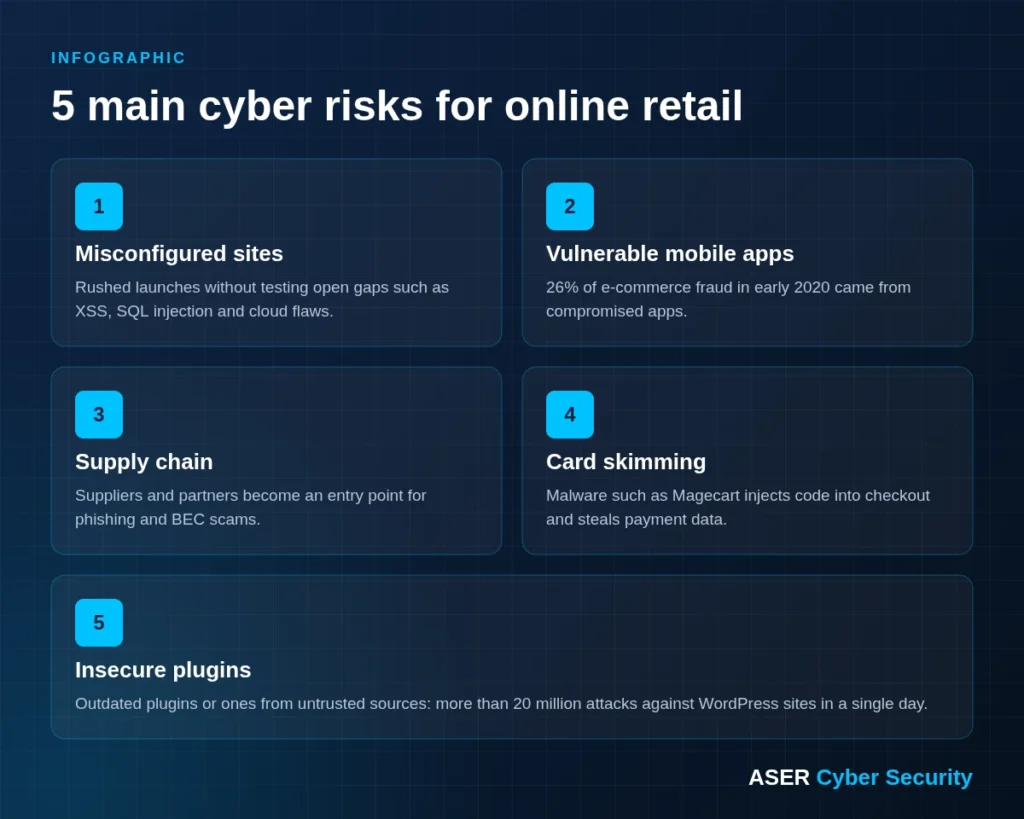
Top cyber risks for online retailers
During this time, it is important for organizations to be fully aware of the security issues that could harm their business and customer relationships.
In addition, the increase in customer volume can have a major impact on the ongoing ability to comply with LGPD (and GDPR, for those selling in Europe) and PCI DSS. The main risks organizations should watch out for include:
Insecure website installation and configuration
In the rush to respond to the sharp rise in online shopping, many retailers started taking orders and introducing new e-commerce systems.
As a result, many may not have fully considered and assessed the impact of these changes from a security perspective. All of these aspects can create potential vulnerabilities for hackers to exploit.
During this period of intense pressure on online retail, there is also a greater risk of introducing application vulnerabilities, especially if changes are being rolled out without proper security testing.
Common application vulnerabilities that can allow an attacker to access confidential customer and financial information include data encryption flaws, authentication flaws, cross-site scripting (XSS) and SQL injection. Cloud security misconfigurations are also a significant problem for companies.
Protect your online store against XSS, SQL Injection and bots
The managed ASER Web Application Firewall (WAF) blocks attacks on your website and checkout before they reach the application, with continuous monitoring by our team.
Mobile app vulnerabilities
Mobile shopping apps proved to be a valuable way to build and maintain customer relationships during lockdown, but they are also an attractive target for cybercriminals.
About 26% of fraudulent e-commerce transactions in the first three months of 2020 occurred as a result of compromised apps – double the previous three months.
The impact of fraud on mobile banking apps highlights the vulnerability of other types of apps. In the United States, the use of banking apps grew 50% during the pandemic and the FBI had to warn users that they may be at greater risk of compromise.
???? Does your store have an app? Find the flaws before criminals do with ASER's Mobile Pentest – penetration testing for Android and iOS apps.
Supply chain risks
No company operates in a vacuum. Every retailer depends on suppliers and partners. While collaboration is good for business, it also increases the chances of supply chain security attacks, as fraudsters seek to compromise organizations by exploiting their relationships with other companies.
According to a recent breach survey, only a small number of UK companies have set minimum security standards for their suppliers. With supply chain attacks on the rise, ignoring this risk is potentially very damaging.
Threat actors moved quickly to exploit the circumstances created by the pandemic. The combination of a fast-moving situation and a rise in online shopping created ideal conditions for them. Hackers seek to compromise organizations both directly and through third-party suppliers, using phishing.
Business Email Compromise (BEC) is a type of attack in which criminals impersonate colleagues and trusted contacts to make fraudulent payment requests. BEC attacks increased dramatically during the pandemic.
Cloned card attacks
Another criminal activity that has grown since the start of the pandemic is card skimming, although a surprising number of companies still aren't protecting their websites effectively.
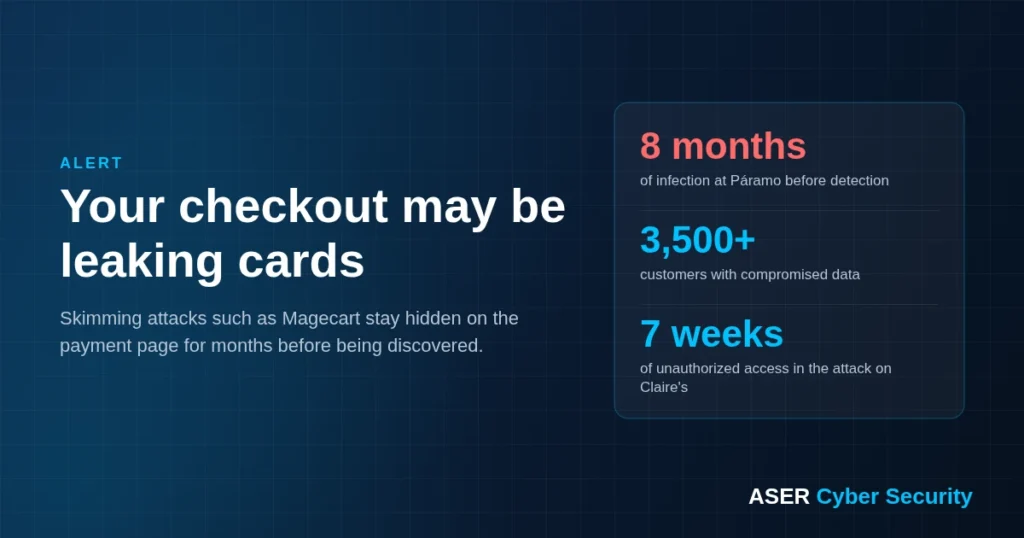
Magecart is a particularly aggressive example of card skimming malware, used to inject JavaScript into a website's checkout or cart page.
Outdoor clothing retailer Páramo was infected with the malware for more than eight months before it was detected. During that time, the personal data of more than 3,500 customers was compromised.
Accessories retailer Claire’s was also hit, with an attack reportedly coinciding with the closure of its physical stores. Cybercriminals stole an unknown volume of customers' payment card data by infiltrating the company's Salesforce Commerce Cloud environment for at least seven weeks.
Insecure plugins
Although plugins offer enhanced functionality and features for online retailers, they also create additional security risks. Not all plugins are security-reviewed before being installed or regularly updated, leaving sites vulnerable.
One study found that more than 20 million attacks were attempted against more than half a million individual WordPress sites in a single day in May 2020.
It is essential to verify that all plugins in use are validated, come from a trusted source and are regularly updated. Good security hygiene also extends to all the other software organizations use to support their websites and apps.
4 practical steps to protect your online business
The changing habits of online shoppers and cybercriminals require retailers to take a multi-layered approach to protecting their websites, apps, data and assets:
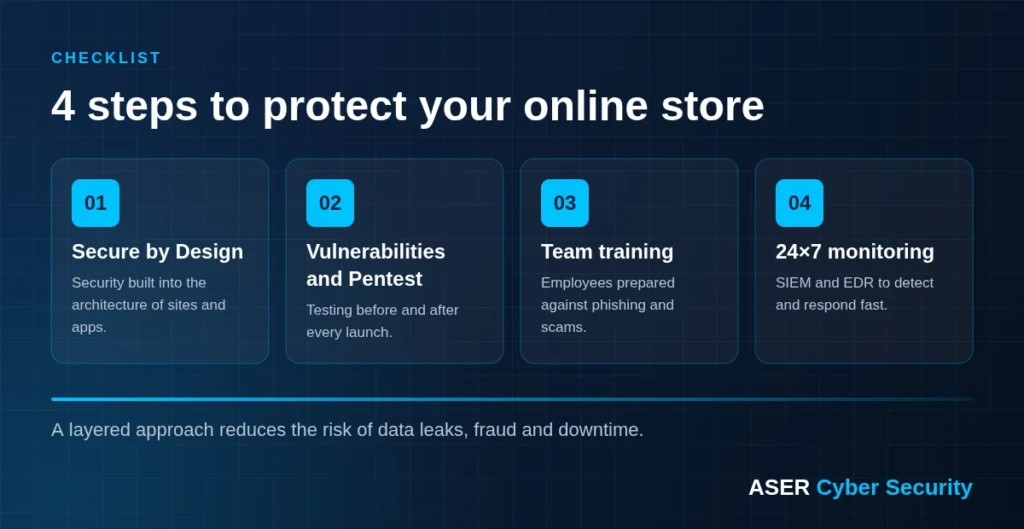
1. Secure by Design applications
Secure by Design refers to the principle of designing software and systems with security in mind from the start of the development process. This means security is the central consideration in every aspect of a website or software, including its architecture.
Prioritizing this approach when developing websites and apps, as well as when launching new products and services, ensures that security is always a priority rather than being sidelined or forgotten altogether.
2. Run regular vulnerability assessments
Organizations should run regular vulnerability assessments to evaluate the security of their websites and apps. Security testing needs to be done before launching a new website or app and after launching new features and services.
Assessments help identify misconfigurations, outdated plugins and the use of insecure credentials. Application pentests should also be commissioned periodically to find vulnerabilities that automated scanning tools may miss.
How many gaps does your online store have today?
With the ASER Vulnerability Assessment and Pentest, specialists simulate real attacks on your e-commerce and deliver a prioritized remediation plan.
3. Provide employee training
Employees are one of the most important lines of defense against cybercriminals. Unfortunately, a common approach used by hackers is to gain initial access to systems by first compromising a staff member's account.
Retailers should provide comprehensive training on security measures and best practices. Staff need to understand the importance of strong passwords and stay up to date on the latest phishing campaigns, so they avoid opening links and attachments from unknown senders.
4. Maintain active endpoint and network monitoring
It is essential for retailers to keep an eye on the status of their websites so they can act quickly if anything suspicious happens. E-commerce companies should monitor websites, web servers, databases and back-end infrastructure for signs of suspicious behavior that could indicate a breach.
This task can be done manually by an administrator or automatically by monitoring technologies such as SIEM (Security Information and Event Management) and EDR (Endpoint Detection and Response).
????️ No team to monitor 24×7? The ASER Managed Security Services handle continuous monitoring, and our Incident Response team acts fast when something happens.
Ensuring long-term e-commerce success
Adapting to change is an integral part of business. But the cybersecurity risks created by the pandemic have generated significant challenges that continue over time.
Cybercriminals are extremely opportunistic, and the large number of new e-commerce sites gives them many new attack opportunities. The end of restrictions didn't reduce demand for e-commerce: shopping habits have changed, and security strategy needs to change too.
To protect customers and the business, retailers need to focus on the technology they use to sell as much as on the products themselves. Staying up to date on cybersecurity and having expert support at the right time helps retailers thrive in volatile business conditions.
Is your online store really protected?
For more than 20 years, ASER has protected Brazilian companies with 100% managed security. Talk to a specialist and get a free assessment of your e-commerce risks.